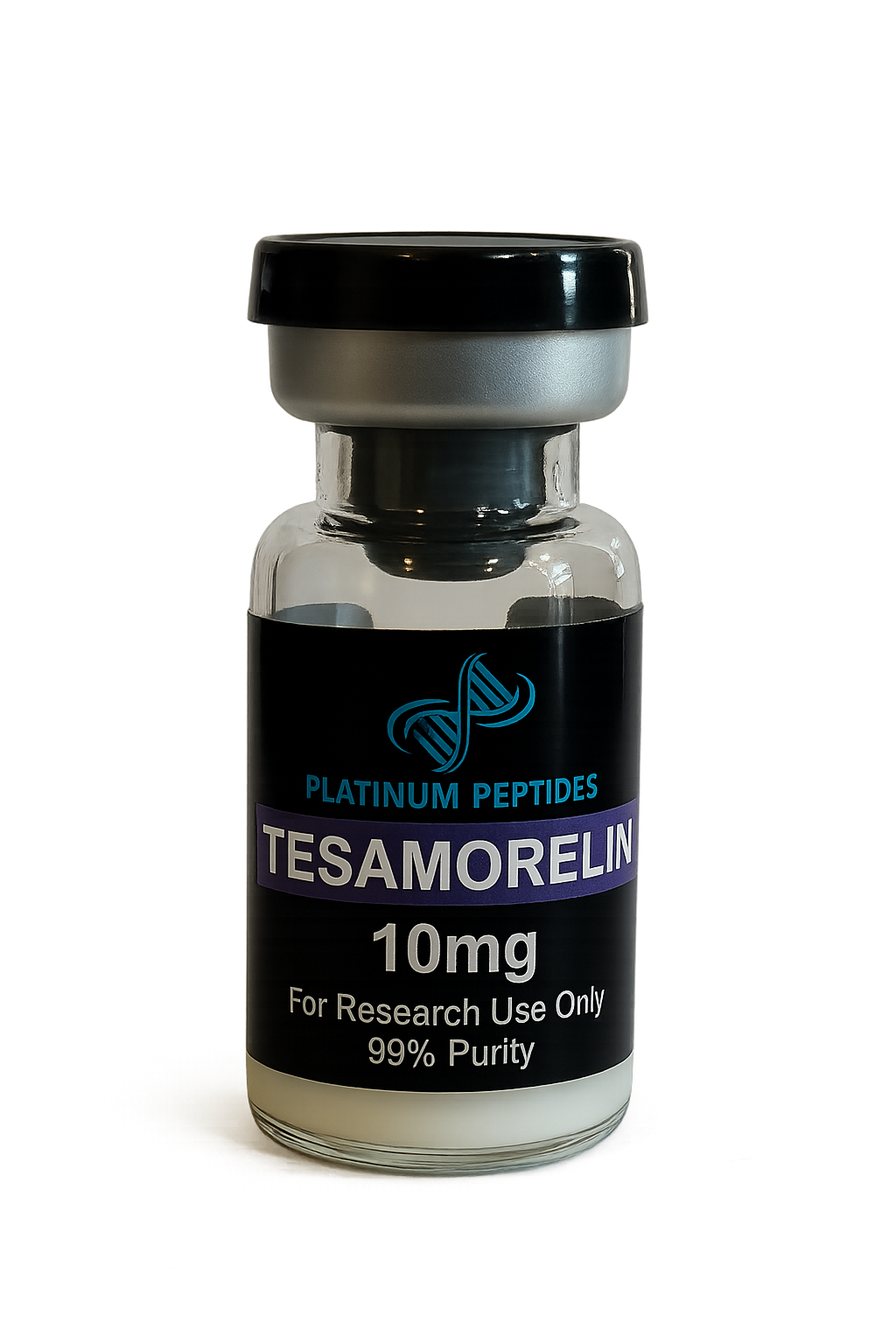
🧬 Tesamorelin: Research Overview
For Laboratory, Scientific, and Educational Research Only, COA
Tesamorelin is a synthetic peptide analog of growth‑hormone–releasing hormone (GHRH), engineered to enhance stability and biological activity in laboratory environments. In preclinical and mechanistic research, Tesamorelin is widely studied for its influence on growth‑hormone secretion, metabolic pathways, and adipose‑tissue regulation. Its targeted mechanism makes it a valuable compound for researchers exploring endocrine and metabolic signaling.
⭐ Key Areas of Scientific Interest
Laboratory and preclinical studies have explored Tesamorelin for its potential involvement in:
Growth‑Hormone Pathway Modulation
• Activation of GHRH receptors in experimental models
• Stimulation of pulsatile growth‑hormone release
• Downstream influence on IGF‑1–related signaling pathways
Adipose‑Tissue & Metabolic Research
• Studies examining Tesamorelin’s effects on visceral‑fat metabolism
• Interest in its role in lipid mobilization and adipocyte regulation
• Exploration of glucose‑metabolism pathways in controlled research settings
Protein Synthesis & Cellular Repair
• Research into GH‑mediated tissue‑repair mechanisms
• Potential involvement in muscle‑cell recovery and regeneration
• Studies examining nutrient‑partitioning effects in preclinical models
Neuroendocrine Signaling
• Interaction with hypothalamic and pituitary pathways
• Exploration of Tesamorelin’s role in endocrine feedback loops
• Interest in its influence on metabolic homeostasis
📊 Structural Advantages of Tesamorelin
Tesamorelin is engineered with a trans‑3‑hexenoic acid modification, which provides:
• Enhanced stability against enzymatic degradation
• Improved receptor affinity compared to native GHRH
• Prolonged activity in laboratory environments
These characteristics make Tesamorelin a preferred GHRH analog for researchers studying GH‑related pathways.
Tesamorelin 10mg
Spend More, Get More
